The best travel neck pillow depends more on how you sleep than on any single “best overall” pick — memory foam pillows with a headrest strap (like the well-known Cabeau Evolution line) give the most consistent support for long-haul flights and side sleepers, while ultralight inflatable pillows (like Sea to Summit’s Aeros line) win for backpackers who need something that packs down to almost nothing. Getting real value means matching the pillow type to your sleep position and travel style, not just buying whichever one has the most reviews.
Travel pillow shopping gets confusing fast, mostly because “best” varies so much by traveler that review lists rarely agree with each other. The more useful starting point isn’t a single winner — it’s understanding the handful of design decisions (material, shape, and attachment style) that actually determine whether a pillow will work for how you personally sleep on a plane.
Quick Facts
- Memory foam pillows: Best support and pressure distribution for long-haul flights; don’t compress down as small as inflatables but hold their shape reliably for hours
- Inflatable pillows: Pack down to pocket-size when deflated, ideal for backpackers and minimalist packers; generally offer less consistent support than memory foam
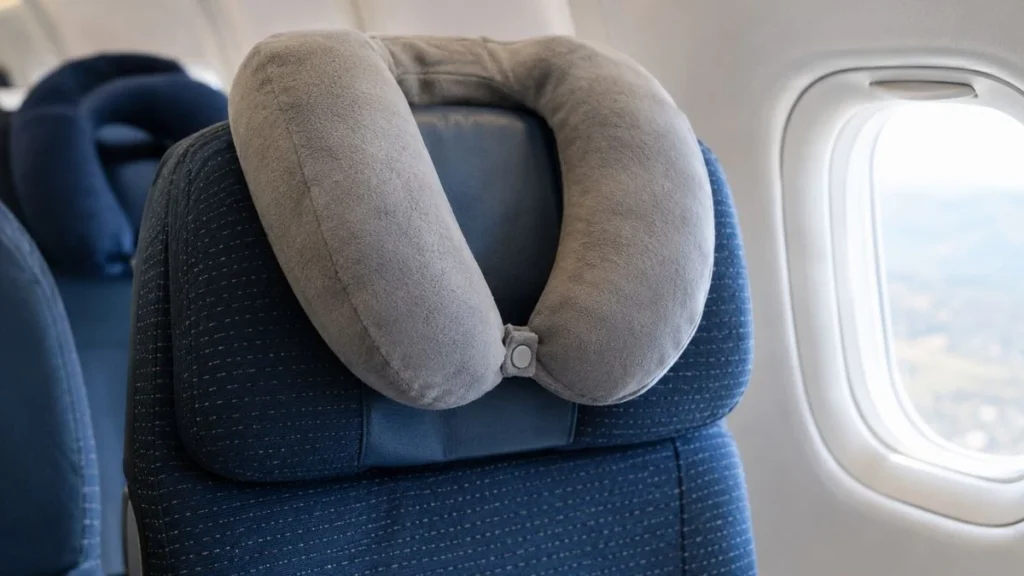
- Headrest/seat straps: A feature on some memory foam pillows that clips to the airplane seat’s headrest post, preventing the pillow from slipping down mid-flight — widely considered one of the most useful design upgrades in recent years
- U-shape vs. wrap-around: Standard U-shaped pillows suit travelers who lean back or to one side; 360-degree wrap-around designs suit side sleepers who need support from multiple directions
- Washable covers: Worth prioritizing given how much time travel pillows spend in shared, high-touch environments like airports and overhead bins
- Price range: Budget inflatable options start around $10–20; premium memory foam pillows with extras (eye masks, cooling fabric, carry cases) commonly run $40–60
Match the Pillow to How You Actually Sleep
The single most useful filter before buying anything is being honest about your sleep position on a plane, since different designs solve genuinely different problems. If your head tends to fall forward, look for a pillow with structured chin or front support rather than a basic U-shape, which does little to prevent that specific motion. If you lean to one side, a U-shaped pillow with raised side cushions — or a full wrap-around design — gives lateral support a flat pillow simply can’t. If you tend to lean back against the headrest, a standard medium-firm U-shape with good rear support is usually sufficient without needing a more specialized (and bulkier) design.
Memory Foam vs. Inflatable: The Real Tradeoff
This is the core decision most travel pillow shopping comes down to. Memory foam pillows deliver noticeably better comfort and consistent support because the material conforms to your neck and holds that shape for the duration of a long flight — the tradeoff is that they don’t compress nearly as small as inflatable options, taking up real space in a carry-on. Inflatable pillows solve the opposite problem: they deflate down to something that fits in a jacket pocket or a small pouch, which matters enormously for backpackers or minimalist packers, but they generally can’t match memory foam’s support quality, especially over several hours.
Why a Headrest Strap Matters More Than It Sounds
One specific feature has become a meaningful differentiator among memory foam pillows in recent years: a strap system that clips the pillow directly to the airplane seat’s headrest post. Without this, even a well-designed memory foam pillow tends to slip or shift as you move during a long flight, undermining the support it’s supposed to provide. Pillows with this kind of attachment system are widely regarded as solving one of the most common frustrations with traditional travel pillows — waking up to find the pillow has slid down and is no longer doing anything useful.
Extras Worth Paying For (and Ones That Aren’t)
Beyond the core shape and material, several add-ons show up across premium travel pillows: built-in eye masks, cooling or breathable fabric covers, integrated carrying cases with a carabiner clip, and machine-washable covers. Of these, a washable cover is arguably the most practically valuable given how much time a travel pillow spends in airports, overhead bins, and other shared spaces — it’s worth prioritizing over aesthetic extras if you’re choosing between otherwise similar options. Cooling fabric matters more if you tend to run warm on flights or fly routes with less reliable cabin climate control; for other travelers, it’s a nice-to-have rather than a deciding factor.
Conclusion
There’s no single travel neck pillow that’s objectively best for everyone — the right choice depends on your sleep position, how much luggage space you’re willing to dedicate to comfort, and whether portability or support matters more for your specific trips. Memory foam with a headrest strap tends to be the strongest choice for frequent long-haul flyers who have the carry-on space to spare; a compact inflatable pillow makes more sense for backpackers and travelers packing as light as possible.
FAQ
Are memory foam or inflatable travel pillows better?
It depends on your priorities. Memory foam pillows generally offer more consistent, comfortable support for long flights but take up more luggage space. Inflatable pillows pack down much smaller and suit minimalist or backpacking travelers, though they typically can’t match memory foam’s support quality.
What’s the benefit of a travel pillow with a headrest strap?
It clips the pillow directly to the airplane seat’s headrest post, preventing the slipping and shifting that undermines support on a standard travel pillow during a long flight. It’s considered one of the more meaningful recent design improvements in this category.
What travel pillow shape works best for side sleepers?
A U-shaped pillow with raised side cushions, or a full 360-degree wrap-around design, generally provides better lateral support for side sleepers than a basic, flat travel pillow shape.
Is a washable cover important for a travel neck pillow?
Yes, it’s worth prioritizing. Travel pillows spend significant time in shared, high-touch environments like airports and overhead bins, making a removable, machine-washable cover a practically valuable feature rather than just a nice extra.
How much should I expect to spend on a good travel pillow?
Budget inflatable options typically start around $10–20, while premium memory foam pillows with extras like eye masks, cooling fabric, or a carry case commonly run in the $40–60 range.
Travel comfort planning connects to other in-cabin topics — see Why Do Airplane Seats Recline? and How to Sleep on a Plane for related comfort strategies.