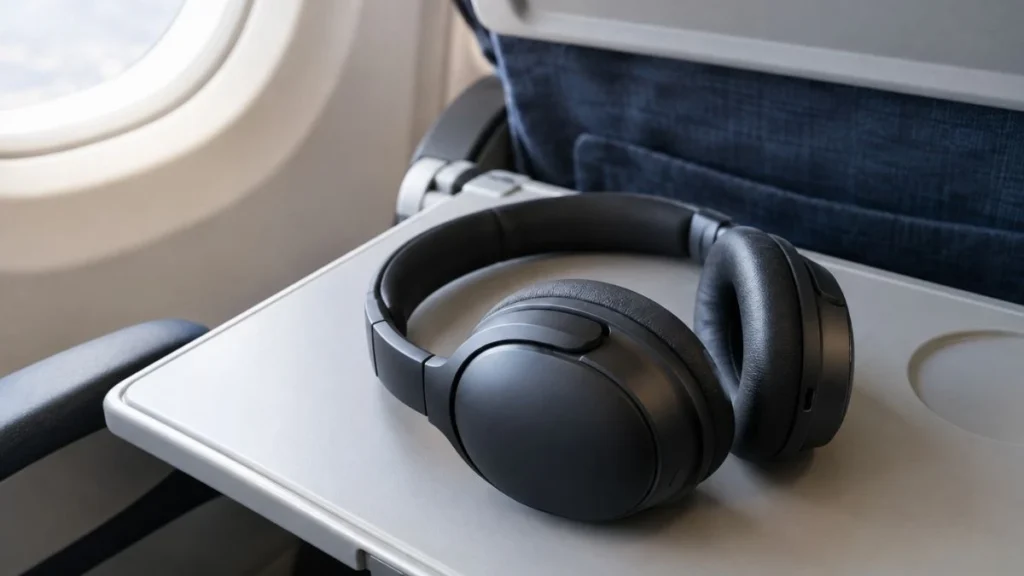
The best noise-cancelling headphones for flights combine strong ANC specifically tuned for low-frequency engine drone, real battery life that comfortably outlasts a long-haul flight, and a wired input option for older aircraft entertainment systems that don’t support Bluetooth. Premium over-ear models from brands like Sony and Bose consistently lead independent testing on cabin noise reduction, but the right pick depends on how you weigh comfort, battery life, and price against peak ANC performance.
Jet engine noise is a fairly specific acoustic problem — a steady, low-frequency drone rather than the more varied ambient noise ANC headphones are often marketed against generally. That’s exactly why not every “great noise-cancelling headphone” performs equally well in a cabin, and why the features worth prioritizing for a flight specifically differ a bit from what matters for, say, blocking out an open office.
Quick Facts
- What matters most for flights: Low-frequency ANC performance (engine drone specifically), battery life covering your longest realistic flight, and comfort over many consecutive hours
- Wired input matters more than it sounds: Many aircraft entertainment systems, especially on older planes, still require a physical audio jack — headphones with a USB-C or 3.5mm wired option remain more broadly compatible than Bluetooth-only models
- Battery life range: Current flagship travel headphones commonly offer 24–60+ hours with ANC enabled, a meaningful spread when comparing long-haul options
- Transparency mode: A useful secondary feature that lets you hear announcements or a flight attendant without fully removing the headphones
- Case and portability: A rigid, compact carrying case protects the headphones in a crowded bag and matters more for frequent flyers than occasional travelers
- Price range: Budget hybrid-ANC options start well under $100; flagship travel-focused models commonly run $300–450
Why Cabin Noise Is a Specific ANC Challenge
Jet engine noise during cruise is dominated by a fairly consistent low-frequency hum, which is a different acoustic profile than the mixed, variable noise ANC headphones often get tested against in general reviews. This is why headphone reviews focused specifically on air travel matter more than generic “best noise-cancelling headphones” lists — a pair that excels at cutting through office chatter or street noise doesn’t automatically perform as well against a steady jet engine drone. Independent testing that specifically stress-tests headphones in flight-like conditions is a more reliable signal for this use case than general ANC rankings.
Battery Life Deserves Real Scrutiny
For long-haul flights, battery life stops being a minor spec and becomes a genuine trip-planning consideration. Current travel-focused headphones span a wide range — some flagship models offer battery life in the 24–30 hour range with ANC engaged, while others specifically engineered for endurance push past 60 hours. For anyone flying regularly on long-haul routes, or connecting through multiple flights without reliable charging access, prioritizing the higher end of this range removes one more thing to think about mid-trip, especially since ANC itself draws noticeably more power than standard playback.
The Wired Input Detail Most Buyers Miss
This is a detail that trips up more travelers than you’d expect: a meaningful number of aircraft, particularly older ones or those on certain long-haul or budget carriers, still rely on entertainment systems that require a physical audio connection rather than Bluetooth. Headphones that include a wired option — commonly via USB-C digital or a standard 3.5mm jack — stay useful across a wider range of aircraft than Bluetooth-only models, which can otherwise leave you unable to use the in-flight entertainment system’s audio at all on an older plane.
Comfort Over Hours, Not Just at the Store
A headphone that feels comfortable during a five-minute try-on can feel completely different after six or more consecutive hours of wear on a long-haul flight. Ear cushion material, clamping pressure, and overall weight all matter considerably more for travel use than for shorter daily listening sessions, and it’s worth weighing comfort reviews specifically focused on extended wear rather than general first-impression comfort ratings when comparing options.
Transparency Mode: A Small Feature With Real Value
Beyond active noise cancellation itself, a transparency (or “ambient sound”) mode — letting outside sound through without removing the headphones — is a genuinely useful secondary feature for flights specifically. It lets you hear a flight attendant’s announcement, respond to a seatmate, or catch a boarding call without needing to physically take the headphones off and lose your seal, which matters more in a cabin environment than in most other everyday listening contexts.
Conclusion
Choosing noise-cancelling headphones for flights specifically comes down to matching a few flight-relevant priorities — strong low-frequency ANC, battery life that comfortably covers your longest routes, a wired fallback option for older aircraft, and genuine multi-hour comfort — rather than defaulting to whichever headphones rank highest on a general, non-travel-focused list. Premium over-ear models from established audio brands consistently perform well across these specific criteria, but the right choice for you depends on how you weigh peak ANC strength against battery endurance, comfort, and price.
FAQ
What headphone feature matters most for blocking airplane noise?
Strong active noise cancellation specifically tuned for low-frequency sound, since jet engine noise during cruise is dominated by a steady low-frequency hum rather than the more varied noise general ANC reviews often test against.
Do I need wired headphones for in-flight entertainment systems?
Not always, but it’s worth having the option. Many aircraft, especially older ones, still rely on a physical audio connection rather than Bluetooth for their entertainment systems, so headphones with a wired input (USB-C or 3.5mm) stay usable across a wider range of planes than Bluetooth-only models.
How much battery life do I need for a long-haul flight?
Enough to comfortably cover your longest realistic flight with margin to spare, since ANC draws more power than standard playback. Current flagship travel headphones range from roughly 24 to over 60 hours with ANC enabled, so frequent long-haul flyers generally benefit from the higher end of that range.
What is transparency mode, and why does it matter on a flight?
Transparency (or ambient sound) mode lets outside sound through without removing your headphones, which is useful for hearing flight attendant announcements or a seatmate without breaking your noise-cancelling seal each time.
Are expensive noise-cancelling headphones worth it for occasional flyers?
It depends on how often you fly and how much comfort and top-tier ANC matter to you. Occasional flyers can often get solid results from mid-range or budget hybrid-ANC options, while frequent long-haul flyers tend to get more consistent value from flagship models with stronger ANC and longer battery life.
Headphone choice connects to other cabin-comfort planning — see How to Sleep on a Plane and Best Travel Neck Pillow for related Flight Gear and Flight Hacks content.