Last updated: 3 August 2026
Standby means asking the airline for a seat on a flight you’re not confirmed on — usually an earlier or later departure on the same route as your booked ticket — and being cleared only if a seat is left over after every confirmed passenger has boarded. You’re added to a ranked list (by fare class, elite status, and check-in time), and clearance typically happens at the gate, often just minutes before departure. It’s a request, never a reservation, and the plane can leave without you if no seat opens up.
The “walk up with a duffel bag and hop on any empty flight” version of standby is mostly gone from mainstream air travel. What’s replaced it is a more structured, app-driven system tied to your existing ticket — you’re generally not flying standby out of nowhere, you’re using standby to move onto a different same-day flight than the one you already booked. That distinction matters, because it shapes both what you’re eligible for and how the airline decides who gets the open seat if one appears.
Quick Facts
- What it is: A request to board a different flight (usually earlier) on the same route as your existing confirmed ticket, contingent on a seat being available after confirmed passengers board
- How you’re ranked: By fare class, elite/frequent-flyer status, and how early you checked in or listed — not simply first-come-first-served
- Where you request it: Airline app or website (fastest), phone/chat support, or the airport gate/counter — apps are generally the quickest and most reliable method in 2026
- Cost: Same-day standby is typically free on most major U.S. airlines for eligible fares; a separate “same-day confirmed change” option that guarantees a seat usually carries a fee
- Fare eligibility: Varies by airline — many carriers now allow Basic Economy to stand by, but some (notably certain ultra-low-cost carriers) exclude their cheapest fare tiers entirely
- Cutoff timing: Airlines generally require you to be checked in and listed well before departure — commonly somewhere in the 45–60 minute range before boarding closes, though this varies by airline and route
What Standby Actually Is (and Isn’t)
Standby is not a way to fly without a ticket, and it’s not a guaranteed way to change your flight for free. It’s a conditional request layered on top of a ticket you already hold: you’re asking the airline, “if a seat opens on this other flight, can I have it?” The airline has no obligation to say yes, and whether it does depends on how full that flight already is, how many other people are also asking, and where you rank among them. Same-day standby — moving to an earlier or later flight on the same route the same day — is the version almost every traveler means when they use the term today.
How the Priority List Actually Works
Not everyone on a standby list has equal odds. Airlines rank standby passengers using a combination of fare class, elite or frequent-flyer status, and how early they checked in or added themselves to the list. A top-tier elite flyer who listed early sits near the top of the queue; a passenger on a discount fare who requested standby at the last minute sits near the bottom. This is why two travelers hoping for the same open seat can have very different realistic chances — the list isn’t a queue you joined in order of arrival, it’s a ranking that reshuffles based on who else is on it.
Requesting Standby: The Practical Steps
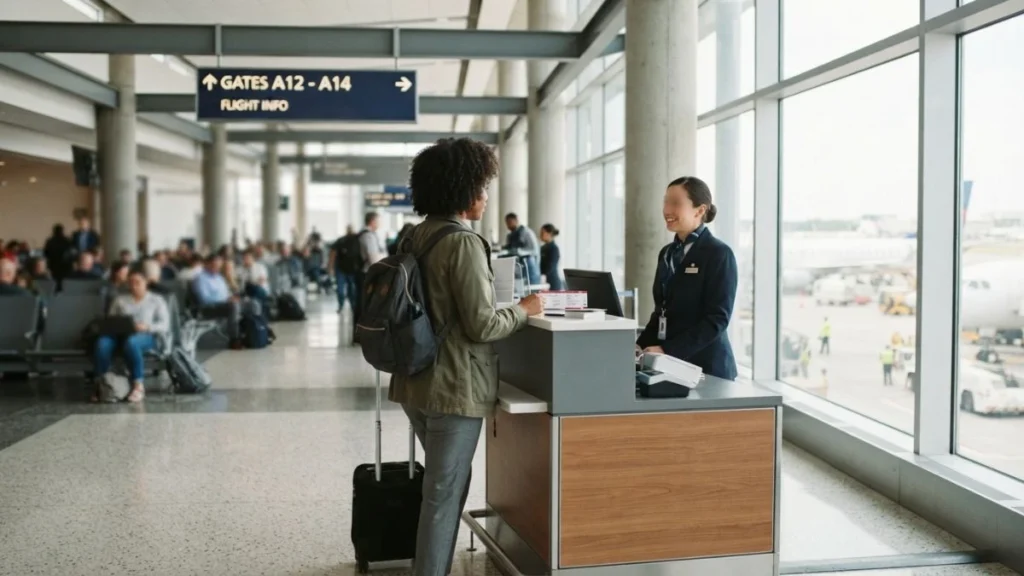
The fastest and most common way to request standby in 2026 is through the airline’s app, where you can typically see eligible flights and submit the request without waiting in a line. Calling or messaging airline support works too, and is often the better option if your itinerary is unusual or your fare rules aren’t clear from the app alone. The airport counter or gate agent remains the fallback — it still works, but on most major carriers you’re effectively giving up priority to anyone who already listed digitally, since app and website requests are typically processed first.
Fare Class and Eligibility
Whether you can request standby at all depends heavily on your fare class, and this is the detail most travelers get wrong. Basic Economy tickets are eligible for standby on many major airlines, but not all — some carriers specifically exclude their lowest fare tier from same-day changes and standby alike. The reliable way to check is your booking confirmation, boarding pass, or the airline’s app itself, which will generally tell you directly whether your specific ticket qualifies before you commit to the plan.
Standby vs. a Same-Day Confirmed Change
It’s worth understanding the difference between the two options most airlines now offer side by side. Same-day standby puts your name on a waitlist with no guaranteed seat, and it’s typically free — you might clear, or you might not, and you won’t know until close to departure. A same-day confirmed change, by contrast, locks in an actual seat on the new flight, but it usually comes with a fee (often waived for elite-status members). If your plans genuinely require a confirmed seat rather than a hopeful maybe, the confirmed-change option — not standby — is the one built for that certainty.
Conclusion
Standby today is a structured, ranked system attached to a ticket you already hold, not an old-school gate-side gamble open to anyone. It rewards travelers with flexible schedules, eligible fares, and genuine tolerance for “maybe” rather than a fixed commitment to a specific departure time. Check your fare class before you count on it, list as early as possible to improve your rank on the priority list, and treat a same-day confirmed change as the better option whenever your plans can’t absorb an uncertain outcome.
FAQ
Is standby free on airlines in 2026?
On most major U.S. airlines, same-day standby itself is free for eligible fare classes, while a separate same-day confirmed change (which guarantees a seat) typically carries a fee. A few carriers charge for standby itself, so it’s worth checking your specific airline’s policy before assuming it’s free.
Can I fly standby on a Basic Economy ticket?
It depends on the airline. Many major carriers allow Basic Economy passengers to request same-day standby, but some ultra-low-cost carriers and certain fare types specifically exclude it. Your booking confirmation or the airline’s app will usually confirm whether your ticket is eligible.
How do I get added to a standby list?
Through the airline’s app or website (generally the fastest option), by phone or chat with the airline, or at the airport gate or counter. App and website requests are typically processed ahead of in-person requests on most major carriers.
How does the airline decide who clears the standby list?
Passengers are ranked by a combination of fare class, elite or frequent-flyer status, and how early they checked in or requested standby — not simply the order they arrived at the gate. Higher fare classes and elite status generally rank higher on the list.
What’s the difference between standby and a same-day confirmed change?
Standby puts you on a waitlist with no guaranteed seat, usually for free. A same-day confirmed change locks in an actual seat on a different flight, but typically costs a fee unless waived for elite status. If certainty matters more than cost, the confirmed change is the safer option.
Standby decisions often connect directly to how much buffer you actually have at the airport — see How Early Should You Arrive for an International Flight? and Can You Change Flight Dates After Booking? for the booking side of the same question.