Last updated: 3 August 2026
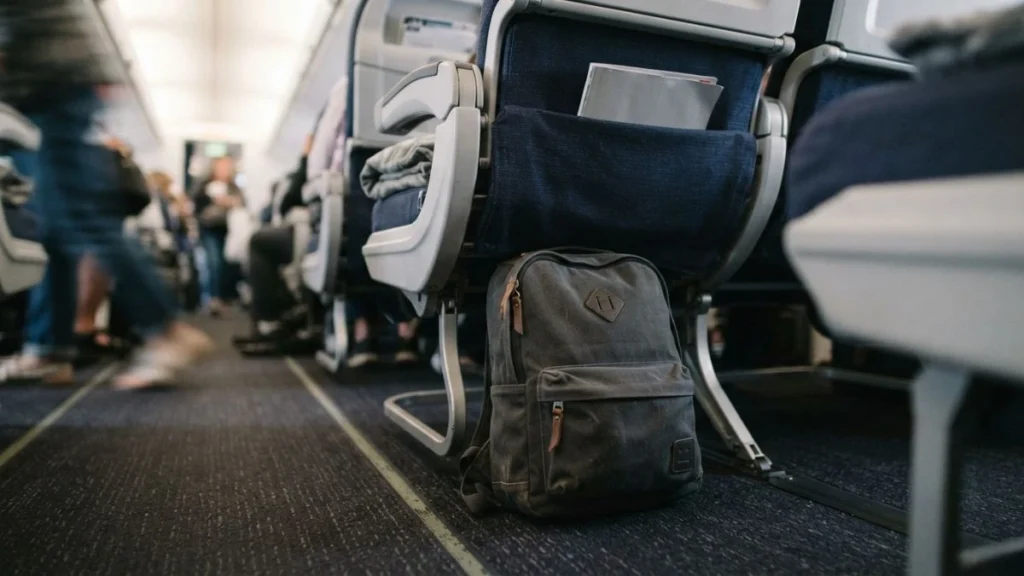
Yes, a backpack counts as a personal item on virtually every major airline, as long as it fits under the seat in front of you and stays within your airline’s specific size limit — commonly somewhere around 18 x 14 x 8 inches, though exact dimensions vary by carrier. A larger backpack that doesn’t fit under the seat, or exceeds those limits, gets treated as a carry-on instead, which matters most on fares that only include a personal item for free.
There’s no universal standard here, which is exactly why the question keeps coming up. Airlines don’t care what you call your bag — they care about two things: does it physically fit under the seat, and does it stay within their specific published dimensions. A backpack that clears one airline’s personal-item limit comfortably might get flagged as a carry-on on a different airline with tighter numbers.
Quick Facts
- What makes something a “personal item”: It fits under the seat in front of you and stays within the airline’s specific size limit — not the type of bag itself
- Typical personal item size range: Roughly 17–18 x 13–14 x 8 inches across most major U.S. airlines, though exact limits vary by carrier
- Larger backpacks: A backpack too big to fit under the seat, or exceeding the airline’s dimensions, is generally treated as a carry-on instead, subject to overhead-bin rules and pricing
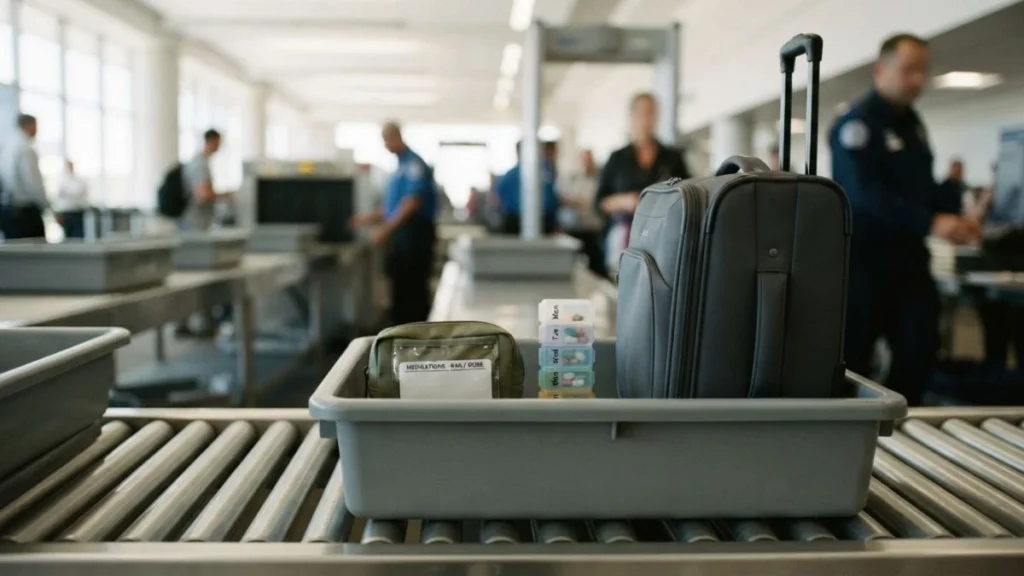
- What’s usually excluded from the count: Diaper bags, medical or mobility devices, child safety seats, and sometimes duty-free purchases typically don’t count against your personal item or carry-on allowance
- Fare-dependent stakes: On fares where only a personal item is included free (carry-on costs extra), whether your backpack qualifies as a personal item vs. a carry-on directly affects whether you pay a fee
- Packed size matters: A backpack that meets the size limit empty can exceed it once fully packed — gate agents judge the bag as it actually is when you board, not its stated dimensions
Size Is the Real Rule, Not Bag Type
The most common misconception is treating “backpack” and “personal item” as automatically the same thing. They’re not — a small backpack that slides fully under the seat and stays within the airline’s dimensions qualifies; a large travel or hiking backpack generally doesn’t, even though it’s still, definitionally, a backpack. Airlines evaluate the physical object: its height, width, depth, whether it blocks under-seat foot space, and whether it can be safely stowed for takeoff and landing — not what you’d call it at a store.
How Size Limits Vary by Airline
There’s genuinely no consistent standard across carriers. Personal item dimensions across major U.S. airlines commonly fall somewhere in the range of 17–18 inches by 13–14 inches by 8 inches, but the exact numbers differ enough between airlines that a backpack cleared on one carrier could get flagged on another. Some airlines publish precise dimensions; others describe it more loosely as “a bag that fits under the seat in front of you” without giving hard numbers at all. The only reliable approach is checking your specific airline’s published personal-item dimensions before you fly, rather than assuming a backpack that worked last time will work again on a different carrier.
What Doesn’t Count Against Your Allowance
Most airlines exclude a specific short list of items from personal item or carry-on counts entirely — commonly diaper bags, medical or mobility devices, child safety seats, and strollers, plus sometimes duty-free purchases made airside. These can typically be brought aboard in addition to your standard personal item and carry-on, rather than eating into that allowance. It’s worth checking your specific airline’s list, since which items qualify for this exception does vary.
The Packed-Bag Problem
A backpack that measures within the size limit when empty can easily exceed it once you’ve actually packed it — a laptop, chargers, a jacket, and the inevitable “just in case” items can turn a compliant-looking bag into something that no longer slides cleanly under the seat. Gate agents and flight attendants judge the bag as it actually presents at boarding, fully packed, not its stated empty dimensions. If your personal item is genuinely borderline on size, packing with compression in mind — rather than assuming the bag’s rated size guarantees compliance — meaningfully reduces the risk of being asked to check it or pay a fee at the gate.
Why This Matters More on Some Fares Than Others
On full-service fares that include both a personal item and a carry-on for free, whether your backpack counts as one or the other matters less, since either way it’s traveling with you at no extra cost. It matters considerably more on basic or discount fares where only the personal item is included and a full carry-on costs extra — in that situation, whether your backpack qualifies as a personal item rather than a carry-on directly determines whether you’re charged a fee at check-in or the gate.
Conclusion
A backpack counts as a personal item whenever it fits under the seat in front of you and stays within your specific airline’s published dimensions — not because it happens to be a backpack rather than a purse or tote. Because size limits genuinely vary by carrier, and because a bag’s packed size can differ meaningfully from its empty dimensions, checking your airline’s specific numbers before you fly — and packing with those numbers in mind — is the most reliable way to avoid a surprise fee at the gate.
FAQ
Can I bring a backpack as my personal item?
Yes, on virtually every major airline, as long as it fits under the seat in front of you and stays within that airline’s specific personal-item size limit. The bag type doesn’t matter — the size and fit do.
What size backpack counts as a personal item?
It varies by airline, but a common range across major U.S. carriers is roughly 17–18 inches by 13–14 inches by 8 inches. Some airlines publish exact numbers; others simply require that the bag fits under the seat in front of you.
What happens if my backpack is too big to be a personal item?
It’s generally treated as a carry-on instead, meaning it needs to fit in the overhead bin and meet your airline’s carry-on size limits. On fares where a carry-on costs extra, this can mean an additional fee if you hadn’t planned for it.
Does a diaper bag count as my personal item?
Usually not — most airlines specifically exclude diaper bags, along with medical or mobility devices and child safety seats, from counting against your personal item or carry-on allowance, letting you bring them in addition to your standard bags.
Can a backpack that fits the size limit empty still get rejected at the gate?
Yes, if it no longer fits under the seat once fully packed. Gate agents and flight attendants judge the bag as it actually presents when you board, not its stated empty dimensions, so overpacking a borderline-sized backpack is a common way travelers get flagged.
Backpack sizing questions connect naturally to broader cabin comfort planning — see Why Do Airplane Seats Recline? and Best Carry-On Backpack for related packing and comfort topics.