Last updated: 3 August 2026
A fare class is a single letter — like Y, W, J, or F — that appears on your booking and determines far more than which cabin you’re in. It controls how many miles you’ll earn, whether you’re eligible for a complimentary upgrade, how flexible your change and cancellation rights are, and how much you actually paid relative to other passengers sitting in the exact same cabin. Learning to read it turns a cryptic letter code into genuinely useful information about the ticket you’re holding.
Two passengers can sit next to each other in the same physical seat, in the same cabin, on the same flight, and have booked under completely different fare classes — different prices, different mileage-earning rates, different rules for changing or canceling. The fare class is what explains that gap, and it’s hiding in plain sight on nearly every booking confirmation, even though airlines rarely explain what it means.
Quick Facts
- What it is: A single letter code (the “booking class” or “reservation booking designator”) that determines your fare’s price tier, mileage-earning rate, and flexibility — distinct from your physical cabin
- Common cabin-defining letters: F for First, J for Business, W for Premium Economy, and Y for full-fare Economy — though many other letters also fall within Economy at different discount tiers
- Multiple fare classes per cabin: A single cabin, like Economy, is commonly split into several fare classes (Y, B, M, H, Q, V, and more), each with different pricing, refund rules, and mileage-earning rates for the identical physical seat
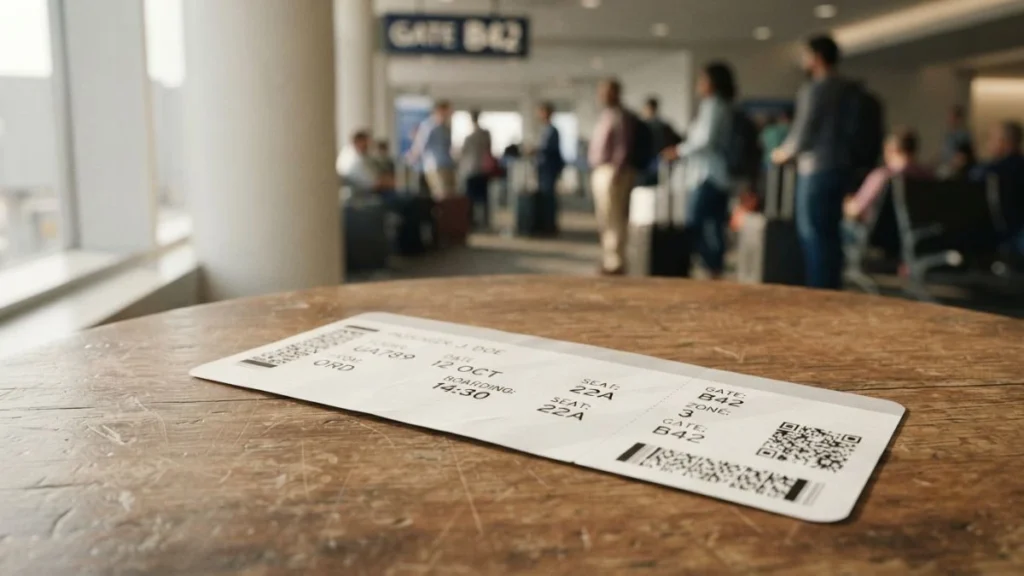
- Where to find it: On your booking confirmation, boarding pass, or itinerary — often labeled “fare class,” “booking class,” or represented by a single letter near your flight details
- Fare basis code: A longer code built around the fare class letter that encodes additional rules — minimum stay requirements, advance purchase restrictions, and refund conditions
- Why it matters: It directly affects upgrade eligibility, how many miles or elite-qualifying credit you earn, and what you’re allowed to change or cancel without penalty
The Letter Isn’t Your Cabin — It’s Your Fare Tier
The most important distinction to understand is that a fare class letter and a physical cabin aren’t the same thing. “Economy” describes where you’re sitting; “Y,” “B,” “M,” or “Q” describes which specific fare you bought within that cabin, each carrying its own price, refund policy, and mileage-earning rate. A full-fare Y-class economy ticket and a deeply discounted Q-class economy ticket put you in the identical physical seat, but they’re genuinely different products from the airline’s perspective — different prices, different flexibility, and different value toward elite status.
What the Letters Generally Mean
While every airline sets its own specific rules, a rough pattern holds across most major carriers: F typically marks First Class, J marks Business, W marks Premium Economy, and Y marks full-fare, fully flexible Economy. Below that, a range of other letters — commonly things like B, M, H, Q, V, K, L, and more — represent progressively more discounted Economy fares, generally with tighter change and refund restrictions the cheaper the fare gets. The lowest tiers, sometimes represented by letters like N or specific Basic Economy designations, typically carry the most restrictions of all — often no seat selection, no changes, and the lowest mileage-earning rate.
Why This Affects Your Miles and Upgrades
This is where understanding fare classes moves from academic to genuinely useful. Airlines commonly tie mileage-earning rates directly to fare class rather than paying a flat rate regardless of what you paid — a full-fare Y-class ticket can earn meaningfully more miles or elite-qualifying credit than a heavily discounted fare in the same cabin. The same logic applies to upgrade eligibility: airlines typically restrict complimentary or mileage-based upgrades to specific fare classes, meaning two travelers in identical economy seats might have very different odds of landing a business class upgrade purely because of which fare class letter is attached to their ticket.
Reading the Longer Fare Basis Code
Beyond the single fare class letter, you’ll sometimes encounter a longer alphanumeric string called a fare basis code — something like “QOWEX” rather than just “Q.” The fare class letter typically leads this code, with the remaining characters encoding additional rules: minimum stay requirements, advance purchase restrictions, seasonal pricing, and specific refund or change conditions. It’s denser than the single-letter fare class and not something most travelers need to fully decode, but knowing that the first letter is your actual fare class — and everything after it is supplementary rule information — makes the longer code far less intimidating if you do need to dig into the specifics.
Where to Actually Find Your Fare Class
Your fare class typically appears on your booking confirmation email, your e-ticket receipt, or sometimes directly on your boarding pass, often labeled explicitly as “fare class” or “booking class,” or shown as a single letter near your flight details. If it’s not obviously labeled, your airline’s customer service or a quick look at the full fare basis code on your itinerary can usually clarify it. Third-party tools built specifically for checking real-time booking class availability can also show you what fare classes are currently open on a given flight, which is useful if you’re specifically trying to book into a fare class that earns more miles or qualifies for an upgrade.
Conclusion
A fare class letter is a small piece of your ticket that quietly determines a lot: your mileage-earning rate, your upgrade eligibility, and how flexible your ticket actually is if your plans change. Learning to spot it, and understanding the rough hierarchy from full-fare Y down through the deeply discounted tiers, turns a piece of cryptic airline shorthand into something you can actually use to make smarter booking decisions.
FAQ
What’s the difference between a fare class and a cabin?
A cabin (Economy, Premium Economy, Business, First) describes where you physically sit. A fare class is the specific letter code — like Y, B, or Q — that describes which fare tier you booked within that cabin, and it can vary significantly in price, flexibility, and mileage-earning rate even within the same cabin.
Why do two passengers in the same cabin sometimes earn different miles?
Because airlines commonly tie mileage-earning rates to fare class, not just cabin. A full-fare Y-class economy ticket typically earns more miles or elite-qualifying credit than a heavily discounted economy fare, even though both passengers are sitting in the same physical cabin.
Where can I find my fare class on my ticket?
It’s typically shown on your booking confirmation, e-ticket receipt, or boarding pass, often labeled “fare class” or “booking class,” or represented as a single letter near your flight details.
Does my fare class affect whether I can get a free upgrade?
Often, yes. Airlines commonly restrict complimentary or mileage-based upgrades to specific fare classes, so two travelers in identical seats can have very different upgrade odds depending on which fare class they booked into.
What is a fare basis code, and how is it different from a fare class?
A fare basis code is a longer alphanumeric string that starts with your fare class letter and adds more detail — minimum stay requirements, advance purchase rules, and refund conditions. The fare class is the first letter; the rest of the code encodes the additional rules attached to that specific fare.
Understanding fare classes connects directly to booking-flexibility strategy — see Hidden City Ticketing Explained and Can You Change Flight Dates After Booking? for related fare-rules topics.