Last updated: 3 August 2026
What happens next depends almost entirely on one thing: whether your connection was booked as a single ticket or as two separate tickets. On a single ticket, the airline is generally responsible for rebooking you on the next available flight at no charge if the missed connection was their fault (a delay or cancellation on the first leg). On separate tickets, the second airline typically has no obligation to you at all — it treats a missed flight as a no-show, and you may need to buy a new ticket.
The gap between these two outcomes is enormous, and it’s the single biggest reason travel advice about missed connections can feel contradictory — one person’s “the airline took care of everything” and another’s “I had to buy a brand-new ticket” often comes down to nothing more than how the original itinerary was booked, not how the airline treated them personally.
Quick Facts
- Single ticket, airline’s fault: You’re generally rebooked on the next available flight (same airline or a partner) at no additional charge
- Single ticket, weather/air traffic control caused it: You’re still typically rebooked for free, but usually without additional compensation like meal or hotel vouchers
- Separate tickets: The second airline generally has no obligation to rebook you or refund the missed segment — it’s treated as a no-show, and continuing your trip may mean buying a new ticket
- EU-related flights: EU Regulation 261 can entitle you to compensation up to roughly €600 if a missed connection stems from a delay, cancellation, or denied boarding on a qualifying EU-linked itinerary
- US domestic missed connections: US rules don’t provide the same fixed compensation as EU 261, but automatic refund protections apply if you choose not to travel after a significant delay or cancellation
- What to do immediately: Stay in the secure/transit area if possible and contact the airline (app, gate agent, or phone) as early as you can — earlier requests generally get better rebooking options before flights fill up
The Single-Ticket Safety Net
If your entire itinerary — including the connection — was booked as one ticket, the airline has taken on responsibility for getting you to your final destination, not just to the connecting airport. If a delay or cancellation on the first flight causes you to miss the second one, the standard industry practice is rebooking you on the next available flight, often on the same airline or a partner carrier, without an additional fare charge. Whether you’re also entitled to meal or hotel vouchers generally depends on the cause: airline-controllable delays (mechanical issues, crew scheduling, and similar) are more likely to come with these accommodations than weather or air traffic control delays, which are outside the airline’s control even though you’re still typically rebooked for free either way.
Why Separate Tickets Change Everything
This is the scenario that catches travelers off guard, often after they’ve deliberately booked two cheaper one-way tickets instead of a single connecting itinerary to save money. Because the two tickets aren’t linked in the airline’s system, the first airline’s obligation generally ends once it gets you to the connecting airport — even if it got you there late. The second airline has no contractual knowledge that you were relying on a tight connection from a different flight, and typically treats a missed departure as a simple no-show: your ticket may be forfeited, and continuing your trip can mean paying a change fee, a fare difference, or buying an entirely new ticket. Some travel insurance policies with trip-interruption coverage can offset this cost, but it depends heavily on the specific policy.
What EU Rules Add for Qualifying Flights
If your itinerary involves the EU — either departing from an EU airport or flying an EU-based airline into the EU — Regulation EC 261 can provide meaningful protection beyond what’s typical elsewhere. If a missed connection results from a delay, cancellation, or denied boarding within the airline’s control, you may be entitled to compensation of up to roughly €600, on top of your right to be rebooked on the next available flight or refunded for the unused portion of your trip. This is a notably stronger protection than what’s guaranteed for a purely domestic US missed connection, where compensation isn’t mandated the same way.
What US Rules Actually Guarantee
US Department of Transportation rules take a different approach than EU 261 — rather than fixed compensation amounts, they guarantee automatic cash refunds in specific situations: when a flight is canceled and you don’t accept the rebooking offered, when a domestic flight is delayed roughly 3 hours or more (or an international one 6 hours or more) and you choose not to travel, or when the airline makes a significant schedule change. These protections apply regardless of the specific cause of a missed connection, giving you a fallback refund right even in situations where a fixed compensation payment, like EU 261 provides, isn’t available.
What to Actually Do in the Moment
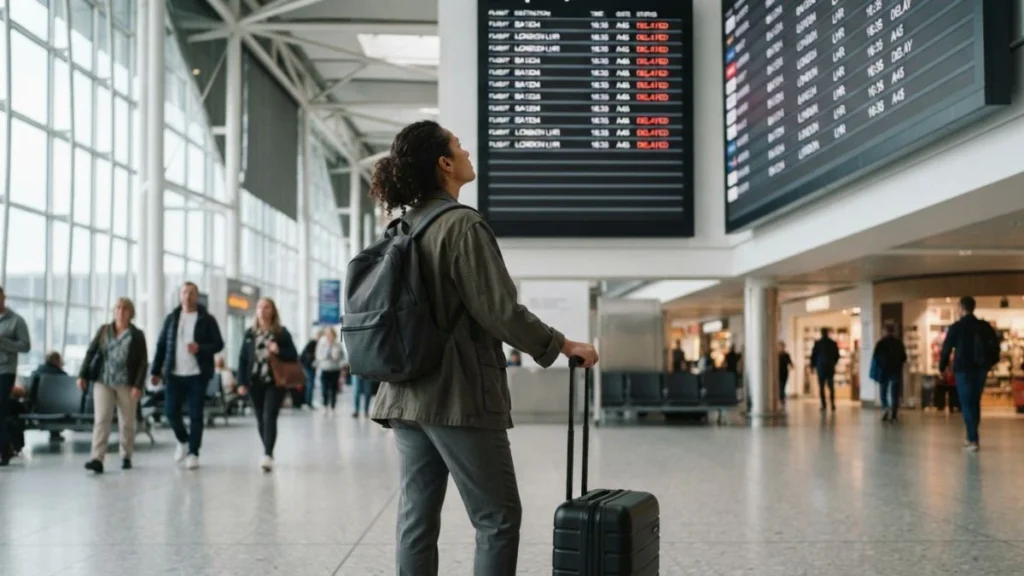
If you realize you’re going to miss a connection, speed matters more than almost anything else. Many airline apps now auto-detect a likely missed connection and offer rebooking before you even reach the gate — checking the app first is often faster than waiting in a line. If not, heading straight to a gate agent or calling the airline while you’re still moving through the airport gives you a head start on remaining seats before a flight fills up. Staying within the secure or transit area, rather than exiting through customs or immigration, generally keeps your rebooking options open and avoids complicating a situation that’s often resolvable within the same terminal.
Conclusion
Whether a missed connection turns into a quick, free rebooking or an unexpected new-ticket purchase comes down mostly to how the original itinerary was booked, not how well you handle the moment itself. A single-ticket itinerary generally puts the responsibility on the airline; separate tickets shift the risk entirely onto you. Knowing which situation you’re in — and contacting the airline as early as possible either way — is what actually determines how smoothly the rest of your trip goes.
FAQ
Will the airline rebook me for free if I miss a connecting flight?
Usually, yes, if your itinerary was booked as a single ticket and the missed connection was due to a delay or cancellation on the first flight. If your connection was booked as two separate tickets, the second airline generally has no obligation to rebook you for free.
What happens if I miss a connecting flight on separate tickets?
The second airline typically treats it as a no-show, and your ticket for that segment may be forfeited. You’ll likely need to pay a change fee, cover a fare difference, or buy an entirely new ticket to continue your trip.
Am I entitled to compensation if I miss a connecting flight in Europe?
Potentially, yes. If your itinerary qualifies under EU Regulation 261 and the missed connection resulted from a delay, cancellation, or denied boarding within the airline’s control, you may be entitled to compensation of up to roughly €600, plus rebooking or a refund.
Does missing a connecting flight in the US guarantee compensation?
Not fixed compensation the way EU 261 provides, but US rules guarantee automatic refunds in specific situations — such as a canceled flight you decline to be rebooked on, or a significant delay you choose not to travel through.
What should I do the moment I realize I’ll miss my connection?
Check your airline’s app immediately, since many now auto-detect likely missed connections and offer rebooking before you reach the gate. If not, contact a gate agent or the airline directly as early as possible, and stay within the secure transit area if you can.
Missed connections tie directly into how much buffer you build into your itinerary in the first place — see Can You Leave Airport During Layover? Rules & Timing Explained and How Early Should You Arrive for an International Flight? for the timing side of the same risk.