The single highest-leverage habit for sleeping on a long-haul flight is setting your watch to destination time as soon as you board and sleeping according to that clock, not your departure time zone. Beyond timing, choosing a window seat (to lean on and avoid being disturbed), skipping alcohol and late caffeine, and blocking light and noise with an eye mask and earplugs are the strategies most consistently backed by both sleep research and experienced traveler advice — a 2024 chamber study found alcohol at cabin altitude cut deep sleep nearly in half.
Sleeping on a plane is one of those skills that looks effortless for some travelers and nearly impossible for others, but the difference usually comes down to a specific set of choices about timing, light, and what you eat and drink before boarding — not some innate talent for sleeping anywhere. Understanding the actual mechanisms behind these tips makes them considerably easier to apply consistently.
Quick Facts
- Sleep on destination time: Set your watch to your destination as soon as you board, and time your sleep and meals around that clock rather than your departure time zone — widely considered the single most effective habit
- Window seat advantage: Gives you something to lean on, slightly more control over your space, and less disruption from seatmates needing to get up
- Alcohol works against you: A 2024 chamber study found alcohol consumed at cabin altitude reduced deep sleep from roughly 67 minutes to 46 minutes — the pre-flight “nightcap” is counterproductive, not helpful
- Caffeine timing: Avoid caffeine in the hours before you intend to sleep on the flight, including green tea, which contains caffeine despite not always being thought of that way
- Nonstop flights sleep better: Counterintuitively, flights of 10+ hours often produce more actual sleep than shorter or broken-up itineraries, since there’s more uninterrupted time to settle in
- Melatonin: The most-studied sleep aid for flight-related sleep timing, though its effectiveness and appropriate use varies by individual — consult a doctor or pharmacist before using it, especially alongside other medications
Why Destination Time Matters More Than Anything Else
This is the single habit sleep researchers and frequent long-haul flyers consistently agree matters most. The moment you board, set your watch and phone to your destination’s time zone, and let that — not the time zone you departed from — decide when you eat and when you sleep. If it’s the middle of the night at your destination, that’s your cue to settle in for the flight’s main sleep period, even if it doesn’t feel like bedtime by your body’s current clock. If it’s daytime at your destination, resisting a long mid-flight nap, even when you’re tired, prevents you from arriving wide awake exactly when you need to be settling into your new schedule. This single mental shift does more to align your arrival with genuine, usable sleep than most gear or supplements.
Seat Choice Actually Matters
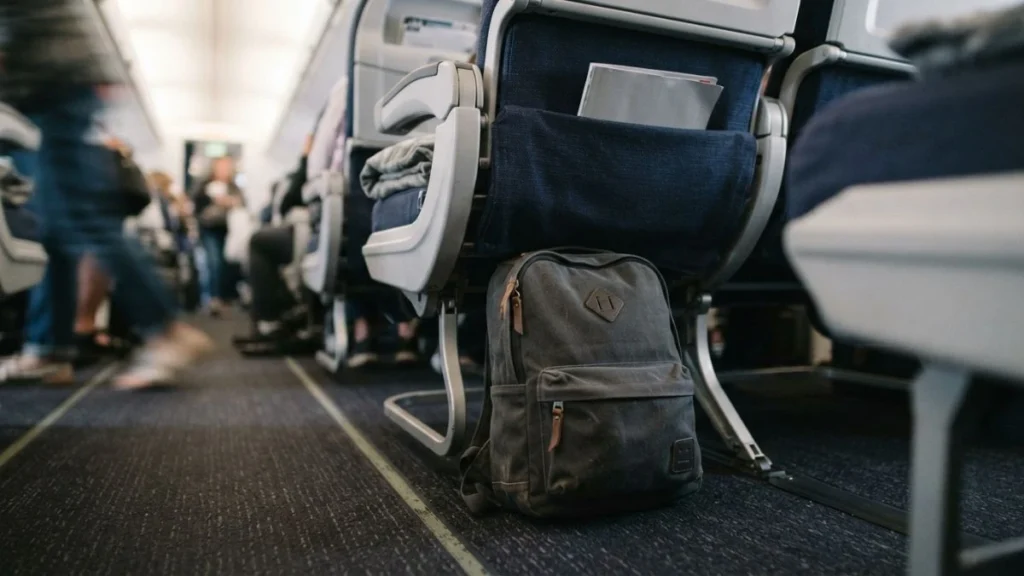
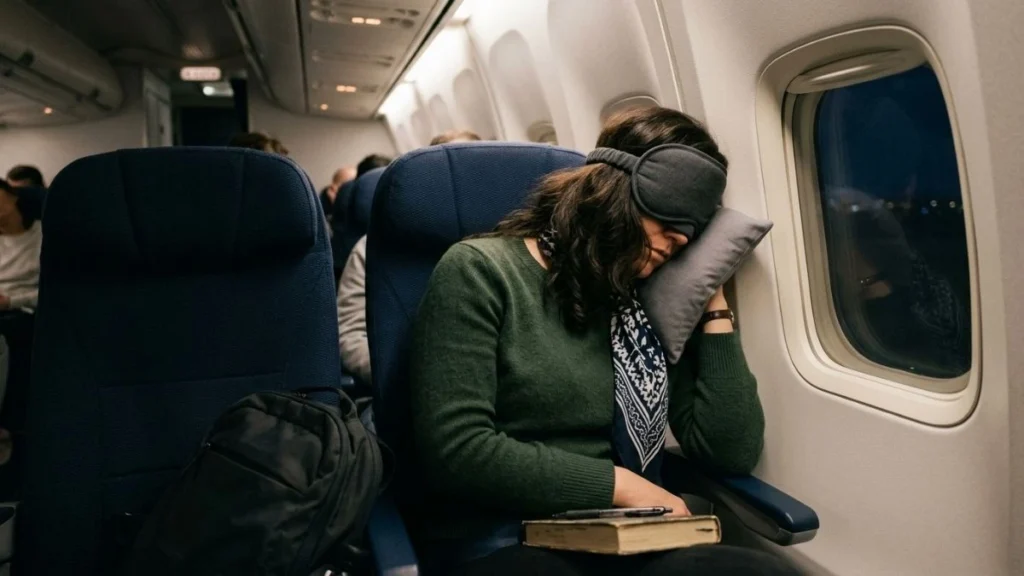
Sleep experts consistently point to the window seat as the better choice specifically for sleep, despite the aisle seat’s appeal for stretching and mobility. A window seat gives you a wall to lean against, slightly more control over your immediate space, and meaningfully less disruption from a seatmate needing to climb past you to reach the aisle. Position within the cabin matters too — a seat further from the lavatories and galley avoids the foot traffic and light that both tend to concentrate near those areas throughout the flight.
What to Skip Before and During the Flight
The evidence here is more specific than general travel folklore suggests. A 2024 chamber study measuring the interaction between alcohol and cabin altitude found that alcohol consumption reduced deep sleep from an average of about 67 minutes down to roughly 46 minutes — a meaningful reduction that runs directly against the common assumption that a drink before an overnight flight helps you sleep. Caffeine deserves the same treatment in the hours leading up to your intended sleep window, and it’s worth remembering that green tea and some other beverages contain real caffeine even when they’re not immediately thought of that way. Declining the in-flight meal, or eating lightly beforehand rather than mid-flight, is another commonly cited tactic specifically because meal service tends to land right in the window many travelers would otherwise use for their main sleep stretch.
Blocking Light and Noise
Beyond timing and what you consume, the physical sensory environment matters considerably. An eye mask and a good pair of earplugs or noise-cancelling headphones address the two biggest environmental disruptors on a plane — cabin lighting that doesn’t always align with your intended sleep window, and the steady mechanical noise plus periodic announcements that make consistent sleep harder than at home. Bringing something with a familiar scent from home, even something as small as a pillowcase, is a smaller but genuinely reported trick some travelers use to help signal “bedtime” to the brain in an unfamiliar environment.
Why Nonstop Flights Sleep Better Than You’d Expect
It’s a counterintuitive but consistently reported finding: travelers tend to get more actual, usable sleep on longer nonstop flights of 10 or more hours than on shorter flights or itineraries broken up by a connection. The reasoning comes down to uninterrupted time — a long, single stretch in the air gives your body a real, extended window to settle into sleep, whereas a shorter flight or one broken by a layover disrupts that continuity before genuine rest has a chance to set in.
A Note on Sleep Aids
Melatonin is the most researched supplement specifically for flight-related sleep timing, and some travelers use over-the-counter sleep aids as well. Because individual response, appropriate dosing, and interactions with other medications vary meaningfully from person to person, this is worth discussing with a doctor or pharmacist ahead of your trip rather than deciding in the moment based on general travel advice — particularly if you take other medications or have an underlying health condition.
Conclusion
Sleeping well on a plane comes down to a specific, learnable set of choices rather than luck or natural talent — anchoring your sleep to destination time from the moment you board is the single highest-leverage habit, followed by choosing a window seat, skipping alcohol and late caffeine, and actively blocking light and noise. None of these guarantee a perfect night’s sleep in an economy seat, but applied together, they consistently move the needle from “arrived exhausted” toward genuinely usable rest.
FAQ
What’s the single most effective way to sleep better on a long flight?
Setting your watch to your destination’s time zone as soon as you board, and timing your sleep and meals around that clock rather than your departure time zone. This single habit is consistently cited as the highest-leverage strategy for arriving rested.
Does having a drink before a flight actually help you sleep?
No — a 2024 chamber study found alcohol consumed at cabin altitude reduced deep sleep from roughly 67 minutes down to about 46 minutes, meaning a pre-flight or in-flight drink tends to work against restful sleep rather than helping it.
Is a window seat or aisle seat better for sleeping on a plane?
A window seat is generally considered better for sleep specifically, since it gives you a wall to lean against and less disruption from a seatmate needing to get up, even though an aisle seat offers more freedom to move around.
Do longer flights make it harder to sleep than shorter ones?
Somewhat counterintuitively, no — nonstop flights of 10 or more hours often produce more actual sleep than shorter or connection-broken itineraries, since the extended, uninterrupted time gives your body a real window to settle into rest.
Is melatonin safe to use for sleeping on a flight?
It’s the most-studied sleep aid for flight-related timing, but individual response and appropriate use vary. It’s worth discussing with a doctor or pharmacist before your trip, particularly if you take other medications or have an underlying health condition.
Sleep strategy connects to other in-flight comfort topics — see How to Avoid Jet Lag and Best Travel Neck Pillow for related Flight Hacks and Flight Gear content.
This is general travel-comfort information, not medical advice — consult a healthcare provider before using melatonin or other sleep aids, especially alongside other medications or existing health conditions.
Official Sources
No single government or official authority source was used; the sleep strategies and alcohol-at-altitude study data are drawn from several independent travel and health publications that are consistent with each other as of mid-2026, rather than a single claim requiring one authoritative reference. Because this article touches on sleep supplement use (melatonin), additional verification against official medical sources is recommended before publishing, and the article explicitly directs readers to consult a healthcare professional.