Last updated: 3 August 2026
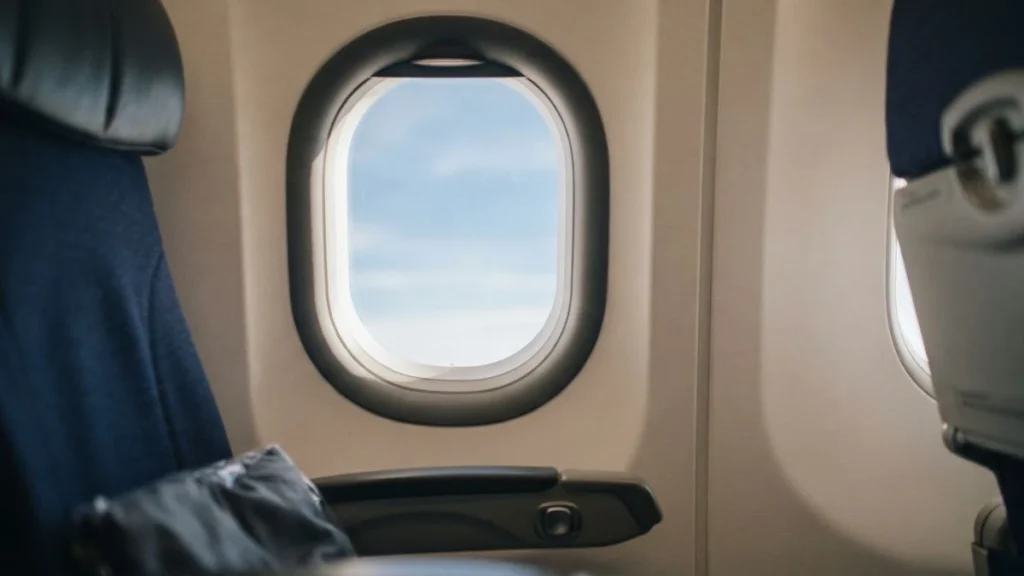
Airplane windows are round (or oval) because sharp corners concentrate structural stress, and rounded shapes distribute that stress evenly instead. The lesson came from tragedy: the de Havilland Comet, the world’s first commercial jetliner, had square windows, and in 1954 two Comets broke apart mid-flight after repeated pressurization cycles caused metal fatigue to crack outward from the windows’ sharp corners. Every commercial jetliner built since has used rounded windows as a direct result.
It’s easy to assume window shape is a styling choice — something an aircraft designer picked because it looked sleeker. It isn’t. The rounded window is one of the more consequential lessons in aviation history, born from investigating a genuine structural failure that killed dozens of people, and it changed how every pressurized aircraft has been built ever since.
Quick Facts
- Why round beats square: Sharp corners concentrate structural stress under repeated pressure changes; rounded corners distribute that same stress evenly, preventing weak points
- The aircraft that taught the lesson: The de Havilland Comet, the first commercial jetliner, entered service in 1952 with square windows
- What happened: Two Comets disintegrated mid-flight in 1954 after metal fatigue cracks spread from the sharp corners of the square windows, killing dozens of passengers and crew
- The root cause: Cabin pressurization cycles — expanding and contracting the fuselage on every flight — concentrated repeated stress precisely at those sharp corners until cracks formed and spread
- Industry response: Every commercial jetliner built since the Comet disasters has used rounded or oval windows, with no exceptions
- Modern window construction: Typically three acrylic panes — an outer structural pane, a middle pane with a small pressure-equalizing “breather hole,” and a thin inner scratch-guard pane
The Comet’s Fatal Design Flaw
The de Havilland Comet was a genuine engineering triumph when it entered service in 1952 — the first commercial jetliner, flying faster and at higher altitudes than any propeller aircraft before it, with a smoother, more pressurized cabin experience. Its windows, though, were squarish, chosen in an era before engineers fully understood how repeated pressurization cycles would stress a fuselage over time. Because the Comet flew higher and faster than anything before it, it encountered the effects of metal fatigue years before the phenomenon was well understood in aviation engineering at all.
What Actually Went Wrong
Every flight cycle — pressurizing the cabin for cruise, then depressurizing on descent — put the fuselage through a stress cycle, expanding and contracting the structure. On a square or rectangular window, that stress doesn’t distribute evenly; it concentrates sharply at the corners, precisely where the surface geometry changes abruptly. Over hundreds of pressurization cycles, this repeated stress caused microscopic cracks to form at the Comet’s window corners, and those cracks slowly propagated through the metal until, in two separate 1954 incidents, the fuselage failed catastrophically mid-flight. Investigators confirmed that sharp corners carried dramatically more stress than any other part of the aircraft structure — a finding that reshaped aircraft design permanently.
Why Rounded Corners Fix the Problem
The engineering fix, once identified, was conceptually simple even though it took a tragedy to discover: eliminate the sharp corners entirely. A rounded or oval window has no abrupt geometric transition for stress to concentrate around — the curve spreads the same pressurization forces evenly across the surrounding structure instead of focusing them at a point. This isn’t unique to aircraft; the same stress-concentration principle shows up in shipbuilding and other pressurized or load-bearing structures, but the Comet disasters are what forced aviation specifically to formalize rounded windows as a non-negotiable design standard.
How Modern Windows Are Actually Built
Beyond shape, today’s aircraft windows are engineered with more than geometry alone. Most consist of three acrylic panes rather than a single piece of glass: a thick outer pane that bears the brunt of the pressure differential at altitude, a middle pane with a small “breather” or bleed hole that equalizes pressure between the layers, and a thin inner pane that mainly protects against scratches and everyday wear rather than bearing structural load. Acrylic is used instead of glass specifically because it’s lighter and more flexible under stress — another layer of the same lesson the Comet disasters taught the industry about designing for pressurization cycles rather than just static strength.
Conclusion
The round airplane window is one of aviation’s clearest examples of a safety standard written directly in the lessons of a real disaster. What looks like a simple aesthetic choice is actually a structural necessity: eliminating sharp corners so pressurization stress spreads evenly rather than concentrating at a weak point, exactly the failure that brought down two de Havilland Comets in 1954. Every rounded window on every commercial jet since has been shaped by that history.
FAQ
Why are airplane windows round instead of square?
Because sharp corners concentrate structural stress under repeated cabin pressurization, while rounded shapes distribute that same stress evenly. This was discovered after the de Havilland Comet, the first commercial jetliner, suffered fatal mid-flight structural failures in 1954 traced directly to its square windows.
What happened to the de Havilland Comet?
Two Comets broke apart mid-flight in 1954 after metal fatigue cracks, caused by repeated cabin pressurization cycles, spread from the sharp corners of the aircraft’s square windows. The disasters killed dozens of passengers and crew and led directly to the industry-wide switch to rounded windows.
Are all modern airplane windows rounded?
Yes. Every commercial jetliner built since the Comet disasters uses rounded or oval windows specifically to avoid the stress-concentration problem that caused those failures. It’s a universal design standard, not a stylistic preference that varies by manufacturer.
What are airplane windows actually made of?
Most modern aircraft windows use acrylic rather than glass, typically built from three layered panes: a thick outer structural pane, a middle pane with a small pressure-equalizing hole, and a thin inner pane that mainly protects against scratches.
Why is there a small hole in the middle of an airplane window?
That’s a “breather” or bleed hole in the middle acrylic pane, designed to equalize pressure between the layers. It ensures the outer pane carries most of the structural load from cabin pressurization while keeping the inner pane at a lower, more manageable pressure differential.
This connects to other behind-the-scenes aircraft design explainers — see Why Cabin Pressure Exists and ETOPS Explained for more on how aviation engineering responds to the physical demands of flight.